REVIEW · TOKYO
Japanese Speaking Experience Meet the locals Friend Cafe Shibuya
Book on Viator →Operated by Welcome Tokyo · Bookable on Viator
Shibuya turns language practice into real conversation. In a laid-back pub setting, you alternate English and Japanese chats every 15 minutes while meeting a mix of locals and visitors.
I especially like the way this experience keeps things moving with seat changes and a clear schedule, so you talk to more than the same two people. I also like that beginner Japanese learners are welcome and you do not have to already be fluent to participate.
One thing to consider: this is over-18 only and you’ll be in a bar setting, so the vibe is social and you’re expected to buy at least a drink at your own cost.
In This Review
- Key Things That Make Friend Cafe Shibuya Worth Your Time
- Why This Shibuya Language Exchange Works for Beginners
- The 2-Hour Game Plan: English, Japanese, Breaks, and a Photo
- Meet at Shibuya Bowling Cafe on Shibuya EST: Getting There and Sizing Up the Venue
- Price and Value: What $29 Really Buys in Shibuya
- Your Conversation Toolkit: Topics Cards, Prompting, and Seat Swaps
- Hosts and the Social Vibe: Candice and Rikiya’s Difference
- Who This Is For (and Who Might Skip It)
- Should You Book Friend Cafe Shibuya?
- FAQ
- Is Japanese required to join?
- How long is the experience?
- Do I need to buy drinks?
- Where does it start?
- How is the conversation structured?
- What’s the group size like?
Key Things That Make Friend Cafe Shibuya Worth Your Time
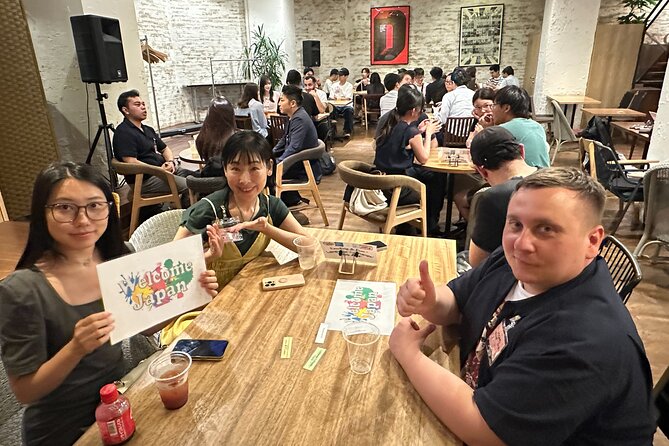
- Fast seat rotation (every 15 minutes) so your conversation doesn’t stall
- English and Japanese run side-by-side with short breaks for reset
- Mixed groups of 3–4 people with staff organizing who you sit with
- Conversation support via topics cards (and conversation prompts during the exchange)
- Central Shibuya location with a simple two-hour format
- Hosts known for keeping the mood friendly, including Candice and Rikiya
Why This Shibuya Language Exchange Works for Beginners
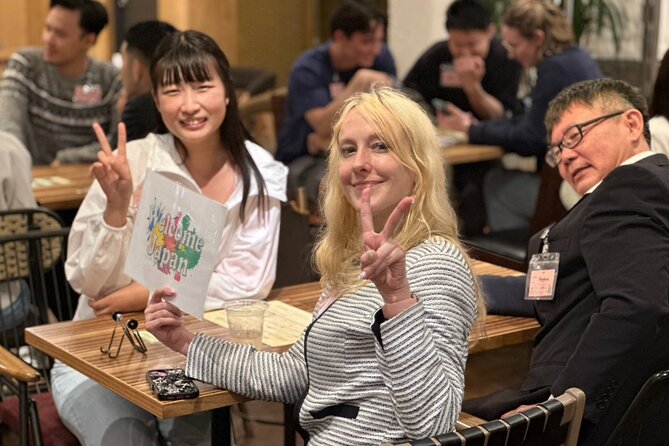
If your Japanese is still in the I-can-order-food stage, this kind of setup is exactly what you need. The event is built around short conversation rounds and structured prompts, not long awkward pauses. You’ll still hear real language spoken by people in the room, but you get a “starter path” so you’re not left staring at the ceiling.
Here’s what makes it feel low-pressure in practice: you’re not stuck with one partner for the entire evening. Instead, you rotate seats and restart with new people. That means you can try a sentence, get a laugh, correct a mistake, then move on and try again. It’s easier to take risks when you know the room will change shortly.
You also get a genuine mix of backgrounds. The groups include Japan-based participants and international visitors, and the English-Japanese split is part of the design. If you want to practice Japanese, you’ll still get your share of Japanese time. If you want to help with English, you’ll still get plenty of chances to speak that too.
And yes, you’ll likely meet people who are learning Japanese as well, so the room doesn’t feel like you’re being tested. It’s more like a social workshop disguised as a hangout.
You can also read our reviews of more tours and experiences in Tokyo.



The 2-Hour Game Plan: English, Japanese, Breaks, and a Photo
This experience runs about 2 hours, and it’s very “clockwork.” When you arrive, you check in at reception and you’ll buy a drink from the store/bar before you join the event. (Alcohol isn’t included, and more on that in the price section.)
The schedule is designed to keep conversations fresh:
- You’ll start with a first English conversation round.
- Then you switch to Japanese conversation.
- After each 15-minute block, there’s about a 5-minute break where you change seats.
- You repeat the rhythm (English, Japanese, English, then Japanese) until you wrap up.
Even the small transitions help. Those 5-minute pauses are when you can breathe, check your notes, and get ready to use the next language. Without those breaks, language exchanges can blur together into one long effort. With the breaks, you stay sharp.
Toward the end, there’s a closing group photo. It’s small, but it gives the night a sense of completion, and it makes it easier to remember names and faces later.
One practical note: reception starts with a short time buffer. If the timing says reception start is a 10-minute starting time, plan to arrive before that window so you can check in and grab your drink without stress.
Meet at Shibuya Bowling Cafe on Shibuya EST: Getting There and Sizing Up the Venue
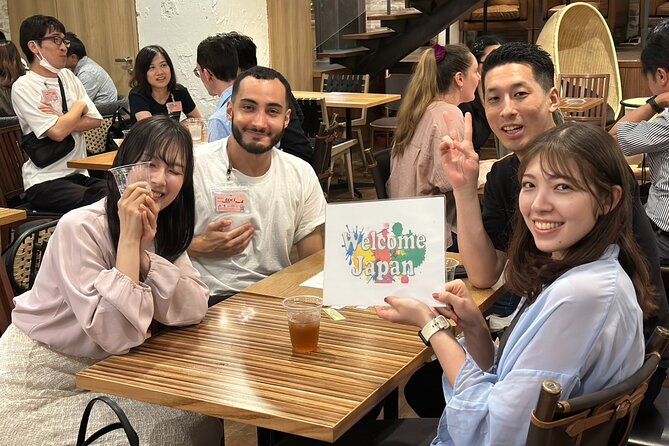
Your meeting point is Shibuya Bowling Cafe, Shibuya EST, at 1-chōme-14-14 Shibuya, Tokyo 150-0002. The event is near public transportation, so you’re not forced into a complicated last-mile walk.
Inside, you’ll find the exchange on the B1F (so look for the venue access level rather than assuming you’ll be on the street level). The event is described as taking place in a pub, and it’s over-18 only. That matters for expectations: it’s not a quiet classroom and it’s not a museum-style meetup. It’s a social evening where people expect conversation and a casual mood.
Some places in Shibuya can be noisy, and one detail worth flagging: the bowling/cafe environment can be loud. If you’re sensitive to noise, keep your expectations realistic. You can still talk, but you might have to lean in and keep your sentences a bit shorter.
The upside is that you’re in an area where locals actually go. After a couple rounds of talking, Shibuya starts to feel less like a photo backdrop and more like a neighborhood you can navigate with confidence.
Price and Value: What $29 Really Buys in Shibuya
At $29 per person, this isn’t trying to replace a paid tutor session. It’s priced like a structured social activity—and that’s a good thing.
What’s included:
- All fees and taxes
What’s not included:
- Alcoholic beverages
- Food and drinks in general
You’re also expected to buy at least one drink at the bar when you arrive. Think of your purchase as part of the night, like a cover charge plus a beverage—not as an optional add-on.
So where does the value come from? In three places:
- Structure. The event doesn’t rely on you to find someone and start negotiating conversation. Staff handles grouping and rotation.
- Time efficiency. In two hours, you can talk to multiple people in both languages. That’s hard to replicate at random in a busy area.
- Social setup. Because this is clearly an exchange event, people are already in the right mindset. No awkward pretending you’re not sure what to do.
If you’re comparing this to “wandering Shibuya and hoping you meet people,” the difference is huge. You pay a modest amount for the scaffolding that makes conversation happen.
And if your plans change, there’s free cancellation up to 24 hours in advance, which is helpful when you’re juggling train delays or day trips.
Your Conversation Toolkit: Topics Cards, Prompting, and Seat Swaps
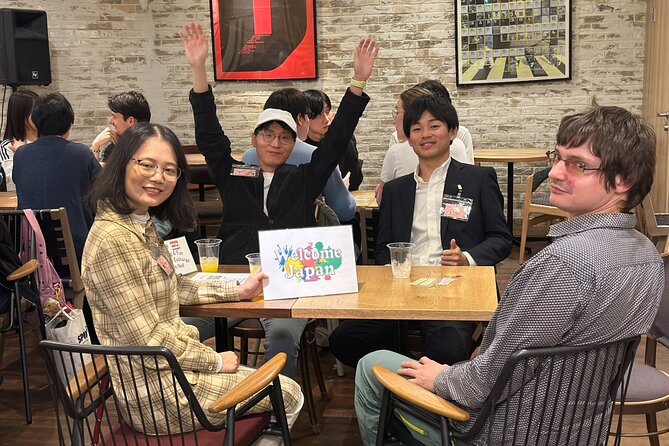
The organizers don’t throw you in with nothing. You get topics cards to help get the conversation started. That’s the kind of detail that saves beginners a lot of trouble. Instead of trying to invent conversation from scratch, you have a target.
The staff also prepares seating so each person lands in the right spot early on. Then they handle the rotation so you don’t have to track who you already talked to. The goal is simple: everyone gets the chance to speak with more people than just 2–3 partners.
You’ll also notice some sessions use language-switching conversation prompts (one review specifically mentioned tablets that switch from Japanese to English). Even if the exact format varies slightly by group, the intent stays the same: you’re not expected to guess what language to use next.
How to get the most out of it:
- Bring a couple beginner-safe questions you can reuse, like what brought them to Japan or what they like to do in their free time.
- Keep your goal modest. Instead of trying to say everything perfectly, aim to keep the chat going for a full 15 minutes.
- When your Japanese feels stuck, switch to simpler phrases you know and ask for clarification. That’s normal in an exchange room.
The smartest move is to treat each 15-minute segment like a mini mission: one question, one answer, one follow-up. After a few rounds, your brain starts to cooperate.

Hosts and the Social Vibe: Candice and Rikiya’s Difference
The energy in a language exchange can swing wildly depending on the host. Here, the host role clearly matters, and you’ll feel it in how the evening flows.
Two names stand out from the hosting style people remember: Candice and Rikiya. Candice is described as punctual and as someone who keeps the room laughing and moving with the group. Rikiya is described as organized and as making people feel comfortable enough to talk more freely.
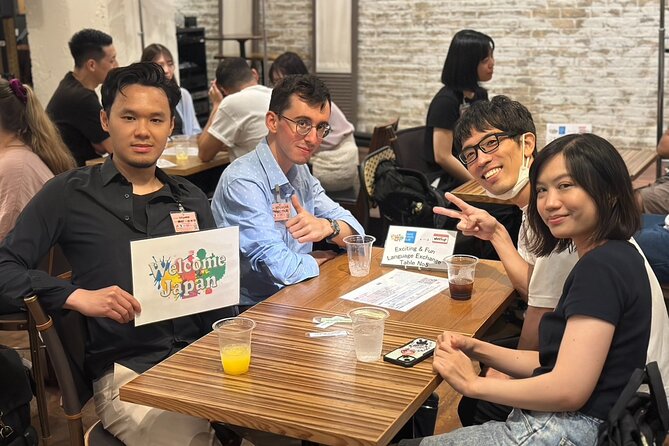
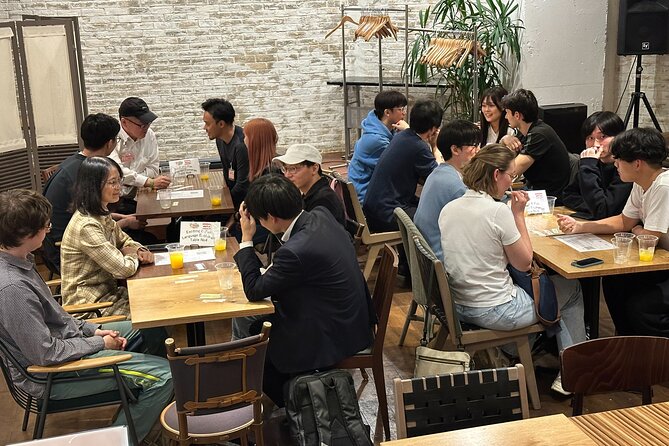
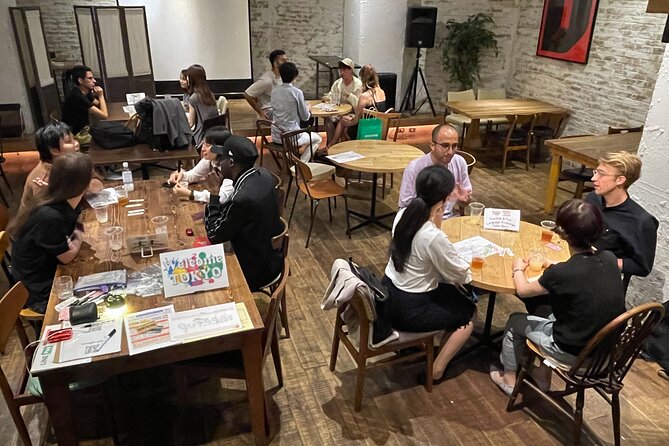
What does that mean for you? It means you’re less likely to end up in a “everyone talks to their comfort friend” situation. The event is actively managed. Staff splits attendees into small groups (3–4 people per group) and mixes locals and foreigners. Then seats are changed again and again so the group energy stays shared, not cliqued.
The other side of the coin: if you’re expecting something super formal or strictly quiet, you might not get that. This is a pub setting. It’s social by design.
But if you want a night where strangers become conversation partners, the host-led organization helps a lot.
Who This Is For (and Who Might Skip It)
This is a strong fit if you:
- Want structured Japanese practice without a tutor vibe
- Prefer meeting people in a guided setting rather than winging it at a bar
- Are a beginner and want to learn through repetition and short rounds
- Want an easy standalone activity or a starter for a bigger Shibuya night
It may be a weaker fit if you:
- Want a quiet, low-noise environment
- Don’t drink and aren’t willing to buy at least one drink at the venue
- Are looking for a deep cultural tour with sights and commentary (this is focused on conversation)
Because the event is in an area where nightlife overlaps with tourist flow, it also helps to accept that people are there to socialize. That’s part of the value.
Should You Book Friend Cafe Shibuya?
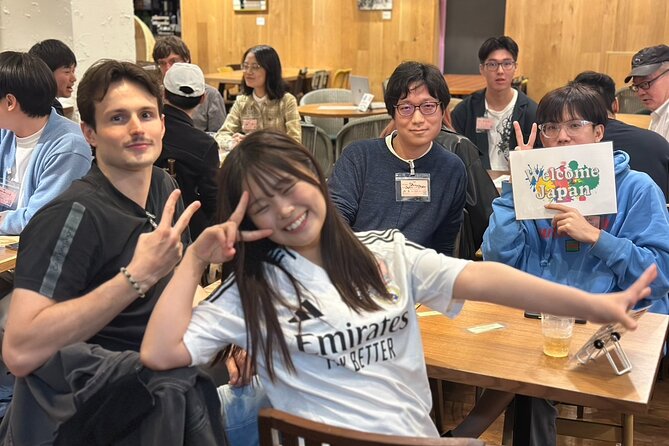
Book it if you want a practical way to speak Japanese in public without the stress of finding the right person. The structure (15-minute rounds, seat changes, topics cards) makes it easy to participate even if your Japanese is basic. And at $29, you’re paying for organization and social momentum, not just for small talk.
Skip it if noise and bar settings aren’t your thing, or if you really prefer silent language practice. For most people, though, this is one of the simplest ways to turn Shibuya into real human connection.
If you do book, come prepared for short chats, not long speeches. Arrive a bit early for check-in, bring your mindset (and ID, since it’s over-18 only), order your first drink right away, and lean into the idea that every new seat is a fresh start.
FAQ
Is Japanese required to join?
No. The event is designed for Japanese learners, including beginners, and you can participate even if you cannot speak Japanese yet.
How long is the experience?
It runs for about 2 hours.
Do I need to buy drinks?
Yes. Alcoholic beverages are not included, and you’re asked to buy at least one drink at the bar when you arrive.
Where does it start?
The meeting point is Shibuya Bowling Cafe Shibuya EST, 1-chōme-14-14 Shibuya, Tokyo 150-0002, Japan. The activity ends back at the meeting point.
How is the conversation structured?
You alternate between English and Japanese conversation in 15-minute rounds, with short breaks (about 5 minutes) while changing seats.
What’s the group size like?
There’s a maximum of 20 travelers, and staff split attendees into small groups of about 3–4 people per group.