REVIEW · TOKYO
Low-cost local pub & bar crawling
Book on Viator →Operated by JUNKO KATO · Bookable on Viator
Tokyo has a second address: Akabane izakaya. This low-cost crawl swaps the usual tourist circuit for local pubs and bars in the Kita City neighborhood, with a guide translating so you can actually talk and order. Two things I especially like are the small group size (up to four), which makes it feel personal, and the practical help on how to order in Japanese, so you’re not just pointing at a menu.
The main thing to consider is that the tour price covers the guide, not what you eat and drink. You should expect to pay for drinks at each stop, and there can be a minimum drink charge tied to the tour guide if alcohol is involved.
If you want to spend a few hours eating and drinking like someone who lives nearby, this is a smart way to do it. You meet at Akabane Station, hop to a few classic spots, and end right back where you started.
In This Review
- Key highlights that make this Akabane crawl work
- Why Akabane is the right kind of off-beat for a Tokyo night out
- Price and logistics: what you’re paying for, and what you’re not
- Meeting at Akabane Station, then letting the guide handle the route
- The guide advantage: Junko-style translation and real ordering help
- Stop 1: Maruken Suisan and the oden alley standing bar
- Stop 2: Marumasu-ya izakaya with river-fish focus
- Stop 3: Maruyoshi skewers, good prices, and the seat rule
- How to make the most of the food: pace your hunger like a local
- Izakaya etiquette I’d actually follow on this crawl
- Who this tour is best for (and who might prefer something else)
- Should you book this Akabane pub crawl?
- FAQ
- How long is the Akabane pub and bar crawling experience?
- How much does the tour cost?
- What food and drink is included in the tour?
- How many people are in the group?
- Where do I meet the guide?
- What are the three stops?
Key highlights that make this Akabane crawl work
- Up to four people means you get real back-and-forth with your guide, not a lecture vibe
- Translation on the spot so you can order from menus that are only in Japanese
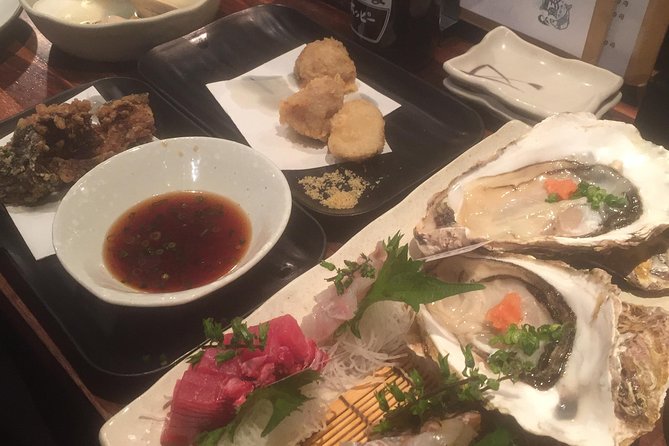
- Oden at Maruken Suisan in a narrow alley-style setting with a standing-bar feel
- River-fish izakaya at Marumasu-ya with a long-established local atmosphere
- Skewers at Maruyoshi where you can eat a lot without feeling price shock, but you should move on quickly
- Japanese ordering advice so you learn the process, not just the places
Why Akabane is the right kind of off-beat for a Tokyo night out
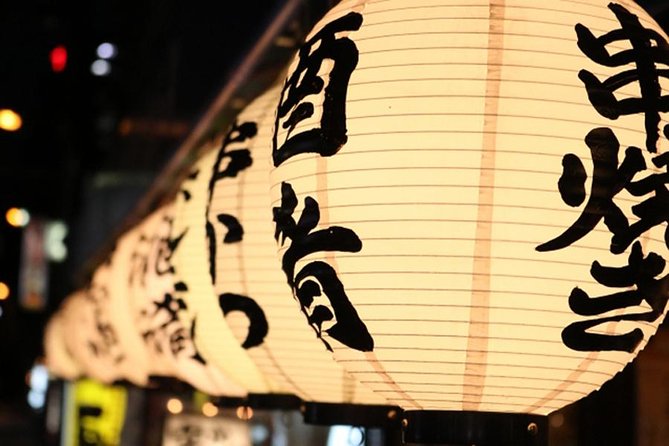
Akabane sits on the outskirts of Tokyo, and that difference matters. You avoid the loud “everyone’s doing the same thing” feeling that can happen in central areas. Instead, you get an evening built around what local people order and linger over.
I also like that the focus stays grounded: pubs and bars first, sightseeing second. Your time goes to three specific food-and-drink stops, not a long walk past photo spots where nobody knows what to do next. It’s a great fit for travelers who want Tokyo flavor without needing to already know the neighborhood rhythms.
You can also read our reviews of more tours and experiences in Tokyo.
Price and logistics: what you’re paying for, and what you’re not
At $32.58 per person for about 3 hours, the value comes from the structure and the help. You’re paying for a guide, translation, and ordering coaching, plus a smooth route through Akabane. The “mobile ticket” is a nice convenience too, since you don’t have to fuss over paper.
What’s not included is the big practical part: alcohol and the minimum drink charge for the tour guide, plus dinner and any other fees/taxes. Each stop has its own menu world, and you’ll likely pay for what you order there. The good news is that at least one of the places you’ll visit is known for reasonable pricing, so your evening can stay controlled if you pace yourself.
Plan for a night where your wallet is more about choices at the table than a fixed tour cost.
Meeting at Akabane Station, then letting the guide handle the route
The tour starts and ends back at Akabane Station (1 Chome-1, Kita City, Tokyo). That’s useful: you don’t have to worry about the last train back from some random alley. It also keeps the whole 3-hour plan tight.
The experience runs in good weather, and if it gets canceled due to weather, you’ll be offered a different date or a full refund. So if you’re trying to fit it into a tight itinerary, keep one flexible evening in mind.
Also, even though Akabane can feel like a “real place” rather than a tourism hub, it’s still reachable. The day-to-day access is part of the charm: you’re not committing to some distant outpost. And Akabane is roughly a short ride from Shinjuku, so you can pair this with other Tokyo plans without burning a whole day just getting there.
The guide advantage: Junko-style translation and real ordering help
The best part of a Tokyo food tour is whether you can actually participate. This one is built for participation. Your guide translates between you and pub staff and advises on how to order in Japanese, which matters when menus are only in Japanese and everyone is moving fast.
In the feedback I was given, the guide experience is a standout. Junko Kato is named as the provider, and multiple comments focus on how her insight made the stops feel easy. That’s what you’re really buying: confidence at the counter, not just a list of restaurants.
Practical takeaway for you: go with curiosity, but also go prepared to follow the guide’s lead. If you try to freestyle ordering without help, you’ll lose time. If you let the guide translate first, you can spend your brainpower on tasting and deciding what you like.
Stop 1: Maruken Suisan and the oden alley standing bar
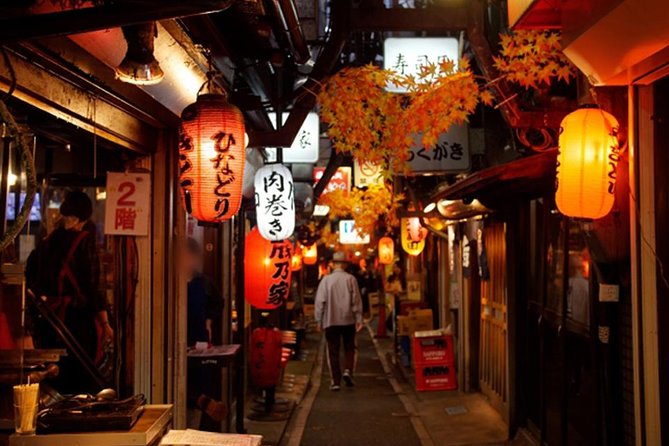
Stop 1 is Maruken Suisan, an older shop known for oden—Japanese-style stew. The setting is part of the experience: it’s tucked into a small alley, and the bar setup is outdoors with standing space. It feels like one of those places you’d never “accidentally” find, even in Tokyo.
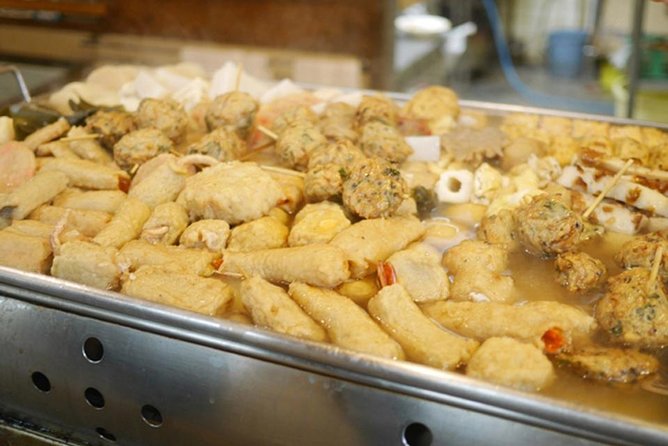
What makes this stop special is the variety. You’ll be able to taste different oden options like vegetables, fish balls, tofu, and more. Oden is also a smart opener because it’s forgiving and easy to understand once you see what’s in the pot. Warm, comforting, and straightforward—perfect for a start to a bar crawl.
One consideration: because it’s an outside standing-bar style place, you’ll want to be comfortable eating on the go. It’s not built for long lingering conversations. Still, that works well for a 3-hour crawl where you’re rotating stops.
Stop 2: Marumasu-ya izakaya with river-fish focus
Next you go to Marumasu-ya, a long-running izakaya-pub famous for river fish. This is where the “local regulars” feeling really shows up. The atmosphere is described as old-time, with locals gathering to drink and eat together.
In practical terms, this stop is where you’ll likely notice the biggest difference between a guided night and a solo night. When you enter an izakaya with only Japanese menus, you often end up ordering something safe. With a guide translating and giving ordering tips, you can choose based on what you’re actually curious to try—rather than what you can guess.
This is also the longest stop at about 1 hour 20 minutes, so it’s not just a quick bite. You should plan to slow down a bit, taste, and settle into the rhythm of the room. If you came hungry, this is where you’ll be glad you did.
Stop 3: Maruyoshi skewers, good prices, and the seat rule
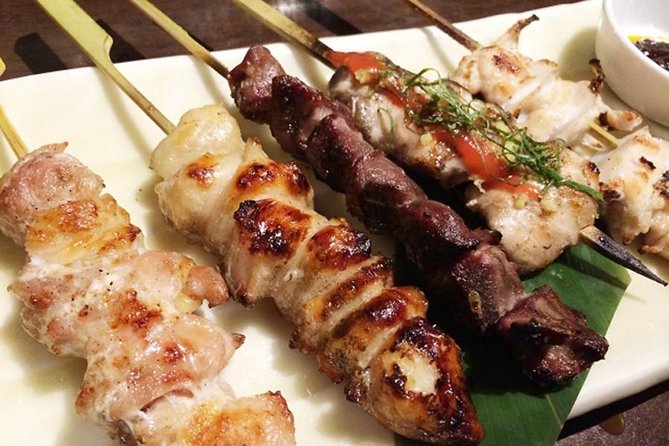
Stop 3 is Maruyoshi, known for skewers. The tone here is very straightforward: even if you eat and drink a lot, prices are described as reasonable. That can be a relief on a pub crawl, where costs can spiral fast if you’re not paying attention.
But there’s an important etiquette note. You’re asked not to drink and stay too long, and to give your seat for locals. That’s a small request, yet it changes the whole feel of the last stop. It’s a reminder that these places run on turnover and shared space, not on tourists taking over for an hour.
If you’re the type who likes to settle in and “just have one more round,” you’ll want to keep that in check here. Think of Maruyoshi as a satisfying finish, not a place to stretch the night.
How to make the most of the food: pace your hunger like a local
A theme from the experience feedback is simple: come with an empty stomach. You’ll want room to taste several items across three stops, and the crawl is built so you can leave satisfied without having to plan a full dinner after.
I’d also suggest you approach it like this:
- At the first stop, warm up and get comfortable with the style (oden is a natural entry).
- At the second stop, order with curiosity and pace your drinks so you don’t hit the third stop too full.
- At the third stop, prioritize skewers and finish strong, but respect the seat-time request.
That pace keeps the evening fun and keeps you from becoming the person who has to rush through the last place because you overdid it early.
Izakaya etiquette I’d actually follow on this crawl
You don’t need to memorize Japanese etiquette rules to have a good night. Still, the experience does highlight a couple of concrete things to respect, and they’re worth taking seriously.
First, follow the seating flow. At Maruyoshi, you’re explicitly asked to avoid staying too long and to give your seat to locals. That’s not a vague cultural lesson; it’s a practical instruction that helps the shop function.
Second, let the guide help you order. The whole point of translation and ordering advice is to prevent awkward gaps, confusion, or accidental menu mistakes. In a compact crawl, you want momentum. When you let the guide translate, you spend less time figuring out what’s possible and more time enjoying what’s on the table.
Who this tour is best for (and who might prefer something else)
This crawl is a great fit if you:
- Want a Tokyo local-food night without needing Japanese fluency
- Prefer a small group where you can ask questions and order with help
- Like the idea of trying foods you might not pick on your own, especially around oden, river fish, and skewers
- Are comfortable moving quickly between places as part of the format
It may not be ideal if you want:
- A fully paid, alcohol-heavy experience with drinks already included (they are not)
- A slow, sit-and-stay kind of evening with lots of downtime
- A strictly budget-fixed meal, since your choices at the pubs affect final spend
Also, if you’re sensitive to standing areas, note that Maruken Suisan includes an outside standing-bar setup.
Should you book this Akabane pub crawl?
I think you should book if you want a structured night out that still feels local. The combination of Akabane-area pubs, three clearly different food styles (oden, river-fish izakaya fare, and skewers), and the guide translation/order help is exactly how you turn a language barrier into an advantage.
If you do book, go in with two mindsets: come hungry, and plan to spend a bit on drinks once you’re there. With that in place, this tour becomes less about paying for a list of restaurants and more about getting the confidence to order and enjoy an authentic Tokyo night.
FAQ
How long is the Akabane pub and bar crawling experience?
It lasts about 3 hours.
How much does the tour cost?
The price is $32.58 per person.
What food and drink is included in the tour?
The tour includes the guide, translation between you and pub staff, and advice on how to order in Japanese. Alcoholic beverages are not included, and dinner is also not included.
How many people are in the group?
The tour has a maximum of 4 travelers.
Where do I meet the guide?
You meet at Akabane Station (1 Chome-1, Akabane, Kita City, Tokyo 115-0045, Japan), and the tour ends back at the meeting point.
What are the three stops?
You visit Maruken Suisan, Marumasu-ya, and Maruyoshi. Each stop includes time for tasting items like oden, river-fish izakaya food, and skewers.