REVIEW · LONDON
Southampton: London via the Cotswolds, Oxford and Pub Lunch
Book on GetYourGuide →Operated by International Friends · Bookable on GetYourGuide
One cruise handoff to Oxford and London. This small-group trip turns your Southampton post-cruise transfer into a full day in the Cotswolds and Oxford, with door-to-door transport and a real pub lunch break.
I love the way the day is paced around guided moments, like hearing how the wool trade shaped these towns and then walking Oxford’s university core with a pro. The guides can be excellent in a practical way too, with names like Nigel Philpotts and Marek Winter showing up as examples of the style you’ll get. The main drawback is the schedule is tight and Oxford involves real walking, so plan for comfort first and speed second.
In This Review
- Key highlights worth planning for
- Turning a cruise transfer into a Cotswolds-and-Oxford day
- The small-group ride: comfort, timing, and a real sense of flow
- Bibury and Arlington Row: the Cotswolds classic, explained in context
- Burford and the River Windrush: stone cottages, church time, and a real walk
- Oxford walking tour: the university city on foot, not by bus window
- Divinity School entry and what to do if it closes
- Free time after the walking tour: how to use it well
- Timing and packing for 10 hours of walking and transfers
- Price and value: is $263 per person fair?
- Who this day trip suits best
- Should you book this Southampton to London Cotswolds and Oxford trip?
- FAQ
- How long is the tour, and when does it start?
- Where do I meet the guide in Southampton?
- Is lunch included?
- What Oxford sights are included?
- Is Divinity School entry included?
- Is the tour guide English-speaking, and how big is the group?
- What luggage can I bring?
Key highlights worth planning for
- Small-group size (up to 10) means more personal attention during the stops and walks.
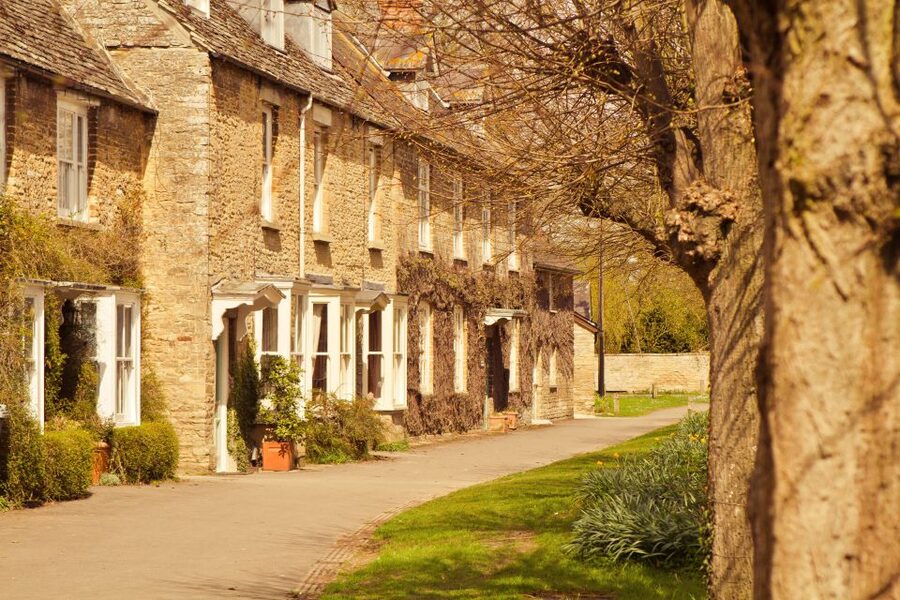
- Bibury’s Arlington Row is the classic Cotswolds view, but you also get context for why it became famous.
- Burford’s stone streets and St John the Baptist Church add a quieter, local-feeling stop beyond photos.
- Pub lunch in a 1402 tavern setting gives you a proper break before Oxford.
- Oxford on foot covers key landmarks, including Radcliffe Camera and the Sheldonian Theatre.
- Divinity School entry is included, with an alternative college visit if it closes.
Turning a cruise transfer into a Cotswolds-and-Oxford day
If you’re sailing into Southampton and heading to London soon after, this kind of excursion is pure strategy. Instead of spending your time on a long, straight transfer, you get a full day that stitches together countryside villages, a traditional pub meal, and a walking tour in Oxford. It’s the best way to “use” your travel day without feeling like you’re rushing from one box-check to another.
What I like most is the door-to-door flow. You meet at the cruise area, then you’re off with a driver and an expert guide who focus on what you’re looking at, not just where you’re going. By the time you reach Oxford, you’ve already built a sense of place in the Cotswolds, so the university landmarks don’t feel like they came out of nowhere.
One more smart angle: this isn’t just sightseeing. You also learn how the region changed over time—especially how the wool and cloth trades shaped these villages and why the area later became a quieter backwater.
You can also read our reviews of more tours and experiences in London.



The small-group ride: comfort, timing, and a real sense of flow
This is a small-group tour limited to 10 participants, and that matters on a day like this. With fewer people, it’s easier for the guide to steer your attention during short walks and keep the group together through tight village lanes. You’re also more likely to get small course corrections, like pacing breaks or adjusting where you stop for views.
Timing is built in from the start. The guide is waiting from 8:00 AM outside the customs exit of your cruise ship, and the vehicle departs at 8:30 AM. That early start is what makes the day work: you’re not spending your whole morning “getting out of town,” and you’re still able to reach Oxford with enough time for an hour-long walking tour plus some free time afterward.
You should also know the vehicle is meant for efficient luggage handling. If you bring extra baggage that doesn’t fit the vehicle rules, you’ll have to arrange separate transportation to your ship—which is the last kind of stress you want on day one.
Bibury and Arlington Row: the Cotswolds classic, explained in context
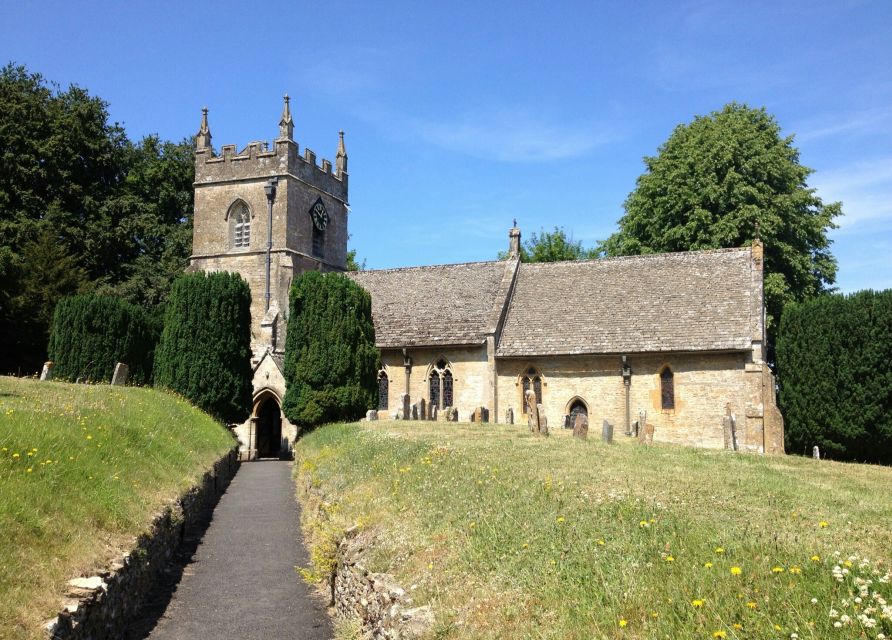
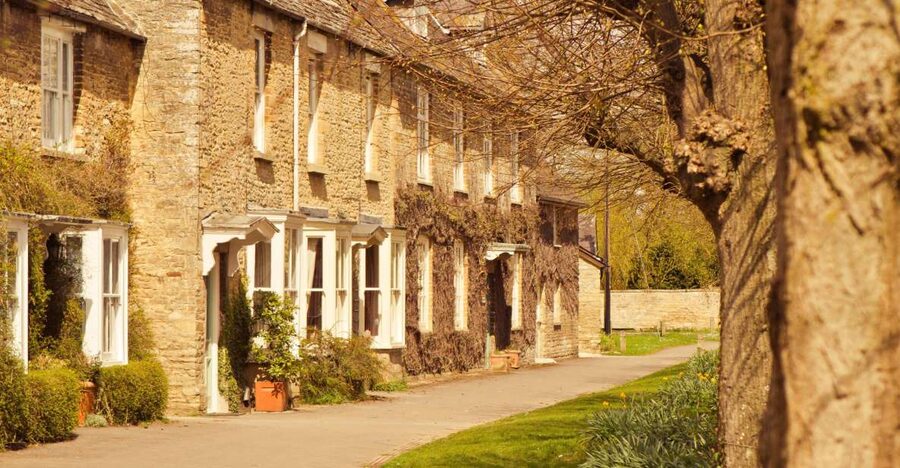
Your first major photo stop is Bibury, famous for Arlington Row, a tight row of traditional stone cottages that looks almost like it was staged. You’ll see why it’s iconic pretty fast—honey-colored stone, a postcard-ready arrangement, and that Cotswolds village texture that holds up even when you’re standing there in daylight.
But the value here is what you learn while you’re there. The guide doesn’t treat Bibury like a random stop. You get context on how the wool trade and the cloth industry shaped the region. In plain terms, you understand why these villages mattered, and why the later slowdown left many places looking “frozen” compared to faster-changing cities.
Practical tip: treat Arlington Row as a short visit you can enjoy slowly rather than a sprint for the perfect angle. If you pause to take in the shapes and materials, you’ll get more satisfaction from the view than if you only chase photos.
This stop also helps set expectations for the rest of the day. Once Bibury clicks in your mind as a real working village with historic industry behind it, Burford feels like more than another pretty town.
Burford and the River Windrush: stone cottages, church time, and a real walk
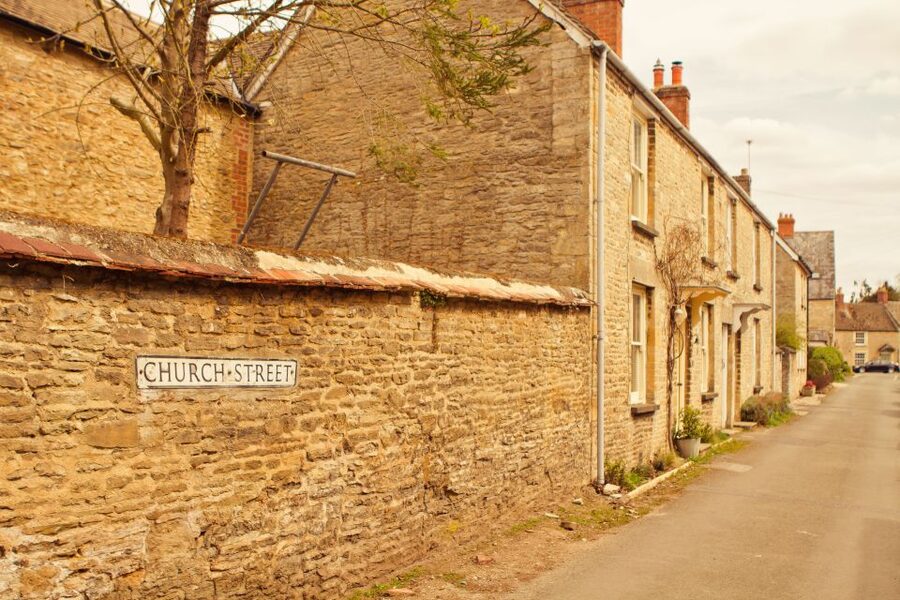
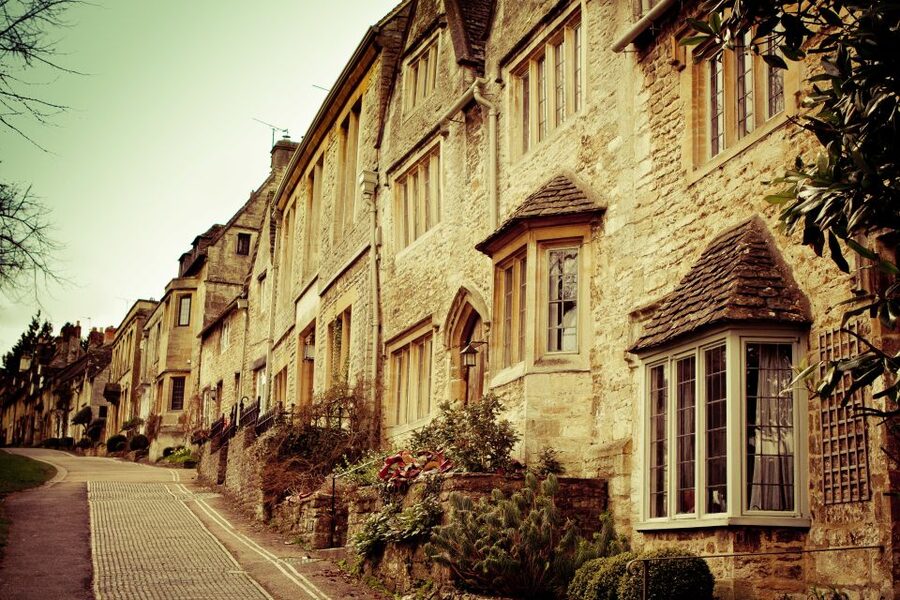
Next comes Burford, another village where the architecture seems to tumble down toward water. Ancient stone cottages cascade toward the River Windrush, and Burford has that gently layered feel that’s hard to capture from the road.
You’ll have a guided walk through town, plus time to see the ancient church of St John the Baptist. It’s a small stop, but it gives the day balance. A lot of Cotswolds tours focus on photos. Here, you also get a chance to slow down and take in the village as a lived-in place with landmarks that matter to local community life.
Then lunch happens in an old tavern built in 1402. That’s a big deal, because it turns the meal into part of the experience rather than a break you endure. You’re in a setting with wood fires and old stone floors, and that alone makes the lunch stop feel like you left the modern world for a while.
From the experience notes, lunch has often been described as excellent, including a chicken meal and another mention of The Lamb Inn as a favorite lunch stop style. You can’t assume every departure will match every menu item, but you can assume this isn’t a boxed lunch.
Oxford walking tour: the university city on foot, not by bus window
After the countryside, Oxford hits with a different kind of energy: organized history, stone facades, and the famous dreaming spires. Your Oxford portion begins with an hour-long walking tour with a professional guide. That walking time is enough to cover major sights without turning the day into a full-day hike.
You’ll pass high-recognition landmarks and university buildings such as the Bodleian Library, the Radcliffe Camera, and the Sheldonian Theatre. You’ll also walk past selected colleges including Christ Church, Merton, Oriel, Corpus Christi, Magdalen, University, Queens, All Souls, Hertford, Trinity, Balliol, and St John’s.
What I think makes this work is the order of it. You start in the university core and backstreets, then you move across cobblestone squares while you learn what you’re actually looking at. It gives you the benefit of a guide’s map in your head, so later free time feels easier.
Sensible warning: Oxford is walk-heavy. Even when the tour is “only” one hour, you’re on cobbles and you may do a bit of standing. Bring comfortable shoes and don’t plan on this being a sit-and-rest kind of day.






Divinity School entry and what to do if it closes
The highlight inside Oxford University is entry to the Divinity School. It’s included, and the tour description makes a specific point that it’s the oldest original purpose-built structure of the university. That detail matters because it gives you a tangible sense of Oxford’s early academic life, not just an exterior view of grand buildings.
There’s also a contingency plan. The Divinity School may close on short notice, and in that case you’ll be taken to an alternative college if available. That keeps the day from collapsing if access changes at the last minute.
This matters for you because Oxford closures can happen without warning—service schedules, building access, and crowd control. A tour that has an alternate option is more likely to protect your sightseeing time.
If you’re the kind of person who loves interiors—stone rooms, old halls, and places where the function shows in the design—this is the reason the tour is more than a drive-through. You get at least one inside moment, not just a camera stop.
Free time after the walking tour: how to use it well
Once the guided portion ends, you get free time to explore at your own pace before heading onward to Heathrow and London drop-offs. This free time is your chance to steer the day toward your interests, and that’s where you can get the most satisfaction out of Oxford.
Because you’ve already seen the dreaming spires and several major university landmarks on foot, you’ll likely find you’re more comfortable navigating the streets. That’s the hidden payoff of a guided walk: you don’t just see places—you get your bearings fast.
A practical approach for your free time:
- If you want photos, pick one or two “you’ll be back later” angles and don’t try to capture everything.
- If you want atmosphere, walk slowly through back streets rather than only returning to the highest-profile buildings.
Also plan your energy. You’ve already had a full day of driving plus village walking, and Oxford’s cobblestones can add up. The tour ends with transport onward, so you don’t need to burn all your energy in the last hour.
Timing and packing for 10 hours of walking and transfers
This is a 10-hour day, starting early. The vehicle departs at 8:30 AM after the 8:00 AM meeting window. That schedule is what gives you Bibury, Burford, lunch, Oxford walking, and then onward drop-off in London/Heathrow.
For packing, the tour’s guidance is straightforward:
- Comfortable shoes (you will use them)
- Weather-appropriate clothing (rain happens in England)
Luggage rules matter more than people expect. Each person is allowed up to 2 items of hold luggage (75x51x28 cm, 23 kg each) and 1 carry-on (55x40x20 cm, 10 kg). Extra luggage may not fit in the vehicle, and you’d then need to arrange separate transport to your ship.
If you’re traveling with a mobility aid like a wheelchair or walker, you must contact the provider in advance with full dimensions and weight. The item also has to fold and fit in storage, and it counts toward your luggage total.
One more small real-world tip: restrooms in small towns can be limited. It’s smart to use facilities when you have the chance, especially on longer village stretches. In general, the guide will try to help if something isn’t available.
Price and value: is $263 per person fair?
At $263 per person, the price feels steep until you break down what’s included. You’re paying for a door-to-door service from Southampton area through to London/Heathrow, with transportation by a coach, an English-speaking guide, lunch, and entry to Divinity School.
What you don’t get is extra food and drink beyond lunch. That keeps the tour rate more predictable, but it also means you should budget a little for snacks or drinks during free time.
Here’s where the value shows up for me:
- You’re combining transfer + sightseeing. That’s usually where independent plans get expensive once you price trains, taxis, and guide time.
- You get a guided Oxford experience plus an inside entry. Exterior views are common; inside access is not.
- The small group size helps make the day feel organized instead of chaotic.
Is it pricey? Yes. But if your alternative is a full transfer day plus separate sightseeing on another day, this is often the more time-efficient option. The best fit is when you truly need to go from Southampton to London smoothly the next part of your trip.
Who this day trip suits best
This works especially well if you want a structured day with minimal planning. If you’re on a cruise and your time in the UK is tight, you’ll like how the day is built around clear stops: Bibury for Arlington Row, Burford for church and pub lunch, Oxford for a guided walking tour and Divinity School entry.
It’s also a good match if you enjoy history but don’t want to spend your time reading maps. The guide’s explanations about the wool trade and the Cotswolds’ shift from industry to quieter life help the villages make sense.
Where you should think twice is if you have very limited mobility and you’re not comfortable with walking on cobbles. The route is short compared to a hiking tour, but Oxford can still be tough. If that’s you, plan ahead with the mobility-aid process before your day arrives.
If you love educational travel that stays fun—scenery plus story—this day trip is a strong option. Guides have a style that often comes through as friendly and quick with facts, with examples like Nigel Philpotts and Marek Winter showing up as guides people remember.
Should you book this Southampton to London Cotswolds and Oxford trip?
I’d book it if you want a practical solution to a post-cruise transfer that also gives you two of England’s most rewarding stops: the Cotswolds villages and Oxford University. The included lunch, the Divinity School entry, and the guided Oxford walk are the combination that makes the price easier to swallow.
I’d think twice if your priorities are slower pacing or minimal walking. This is a packed day by design, and Oxford’s streets are not forgiving footwear-wise.
If you’re on a cruise, the one big green flag is how seamless the flow can be—from pickup at the customs exit, to a day of guided sightseeing, to drop-off in London/Heathrow. That kind of time-saving is hard to recreate on your own without extra logistics.
FAQ
How long is the tour, and when does it start?
The tour lasts about 10 hours. The guide meets you at 8:00 AM, and the vehicle departs at 8:30 AM.
Where do I meet the guide in Southampton?
The guide will be waiting outside the customs exit of your cruise ship. If you’re on Royal Caribbean, Carnival, Disney, Oceania, NCL, Celebrity, or Princess, that’s the meeting point used for the tour.
Is lunch included?
Yes. Lunch is included in the tour, and it’s taken during the day at a traditional pub stop.
What Oxford sights are included?
You’ll enjoy an hour-long walking tour of Oxford University sights, including places such as the Bodleian Library, the Radcliffe Camera, the Sheldonian Theatre, and you’ll pass selected colleges along the route.
Is Divinity School entry included?
Yes, entry to Divinity School is included. If Divinity School closes on short notice, the tour will include a visit to an alternative college if available.
Is the tour guide English-speaking, and how big is the group?
Yes, the tour guide is English-speaking. The group is small, limited to 10 participants.
What luggage can I bring?
You’re allowed up to 2 items of hold luggage per person (75x51x28 cm, 23 kg each) and 1 carry-on (55x40x20 cm, 10 kg). Items must fit the vehicle space limits.